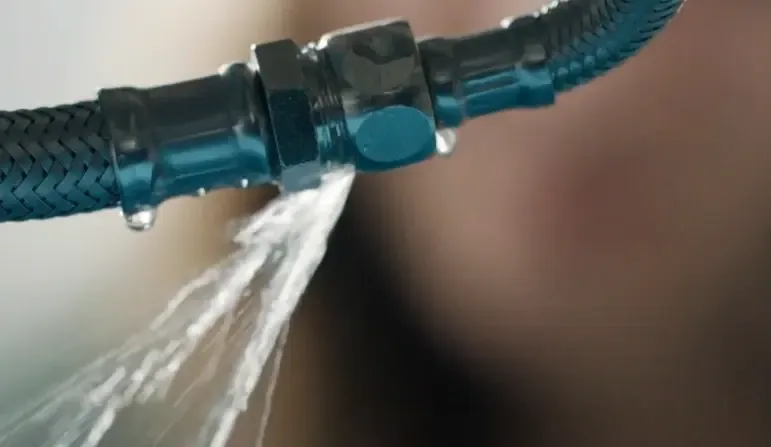
An appliance leak in a rental can begin behind one machine and surface beside a cabinet, doorway, or neighboring room. Fast documentation and a material based inspection help tenants and owners coordinate without guessing where the water stopped.
Key takeaways
- Shut down the appliance and its water supply only when both controls are safely accessible.
- Photograph the machine, hose area, floor edges, cabinets, and belongings before moving wet materials.
- Notify the property contact promptly and keep written records of the report and repair access.
- A dry looking surface does not rule out water beneath flooring or behind a cabinet base.
- Drying progress should follow repeat moisture readings at consistent locations.
Why appliance water travels out of sight
A washing machine hose, dishwasher connection, refrigerator supply, or appliance drain can release water into a tight space. The machine may hide the first wet materials, and nearby cabinets can direct water toward seams instead of leaving one obvious puddle.
By the time someone notices a change, the visible water may be separated from the source.
Stanton housing includes both renters and owners. The 2020 Census counted 11,361 housing units, with 50.6 percent renter occupied and 49.4 percent owner occupied.
Those figures do not describe any single building, but they explain why leak response often involves a resident, property contact, appliance repair, and restoration records rather than one decision maker.
- Check the floor in front of and beside the appliance.
- Look for swelling at cabinet bases and nearby trim.
- Note changes in the next room across a shared floor.
- Keep people away from wet cords and outlets.
The first safe actions in a rental
The resident can stop an appliance or close an accessible valve when that can be done without contacting water or electricity. If the control is behind a wet machine or requires moving heavy equipment, the safer action is to leave it alone and report the condition.
Towels may slow a small clean water spread, but they do not replace inspection beneath the surface.
A concise notice should state when the leak was found, which appliance appears involved, where water is visible, and whether electrical components or the unit below may be affected. The local appliance leak service can then focus on extraction, material checks, and drying after the source is controlled.
- Use a safe shutoff only if it is easy to reach.
- Do not pull a wet appliance away from the wall.
- Send photographs with the written property notice.
- Protect dry belongings without blocking inspection access.
Document the room before it changes
Photographs are most useful when they show context. A wide image can connect the appliance to the doorway and cabinets, while closer images can capture a loose hose, wet floor edge, lifted finish, or stained toe kick.
A short note about discovery time and any shutoff action gives those images a practical sequence.
Belongings should be photographed before disposal, especially when ownership or coverage may need assessment. Receipts for urgent protection and appliance repair can stay with the same record.
The insurance carrier decides coverage, while condition photographs and work notes explain what happened and what mitigation was authorized.
- Take a wide view of the appliance area.
- Capture floor seams, trim, and cabinet junctions.
- List rooms where a change is visible.
- Save repair and cleanup documents together.
How crews find water beneath finishes
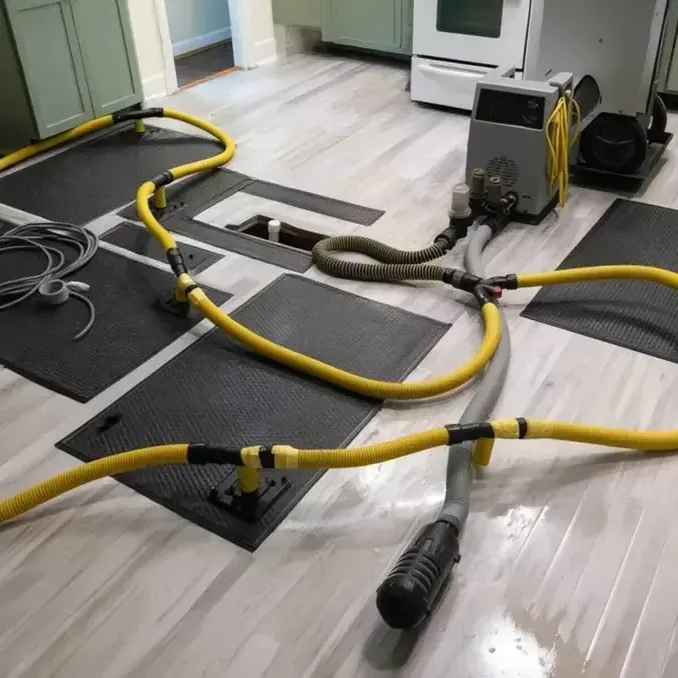
An extraction crew compares the source area with nearby materials of the same type. Readings along thresholds, wall bases, and cabinets help reveal whether water crossed the visible edge.
Continuous flooring deserves particular attention because moisture can travel beneath a surface without producing an immediate stain in the adjoining room.
The work does not assume that every wet floor must be removed. Attachment, condition, contamination, and access all matter.
Sound material may respond to drying, while swollen components, trapped layers, or unsafe exposure can require selective removal. The broader structural drying process uses repeated measurements to test whether retained assemblies are improving.
- Map the appliance footprint and surrounding edges.
- Compare the next room across continuous flooring.
- Check beneath accessible cabinet toe kicks.
- Record where each monitoring point is located.
Working across another unit
Water can move through a floor opening, shared wall, or cabinet penetration before a lower or neighboring unit shows damage. The first report should identify any ceiling stain, dripping fixture, or damp wall observed elsewhere in the building.
That information helps the property contact arrange access without stating that the full route is already known.
Each unit needs its own condition record because finishes and water paths can differ. One room may need surface extraction while another needs inspection above a ceiling.
Occupants should avoid opening walls, drilling holes, or placing uncontrolled fans where hidden wiring or contaminated water may be present.
- Report changes in adjoining units separately.
- Keep access times and contacts in writing.
- Do not assume one dry room ends the water path.
- Preserve photos from every affected interior.
Drying decisions and completion
Bulk water removal reduces the amount that must evaporate, but cabinets, floor layers, and wall bases can remain damp. Air movement and dehumidification are arranged around the materials that can stay.
Equipment may shift as readings show which section is improving and which needs more access.
Completion should rest on comparison readings, not touch or appearance alone. Marked locations allow the restoration team to show the change over the drying period.
The Stanton water damage overview explains how extraction, selective removal, cleaning, and final documentation fit together for leaks from different sources.
- Keep equipment operating as the approved plan directs.
- Do not cover a damp floor with replacement material.
- Ask how dry reference areas were selected.
- Retain the final reading and material notes.
A practical handoff after drying
Once the measured materials reach their target, the property contact still has decisions about appliance repair, cabinet finish, flooring replacement, and resident access. Those tasks should begin from the documented room condition rather than from the date the puddle disappeared.
A clear handoff identifies which components stayed, which were removed, and which require later repair.
Residents can keep copies of notices and photographs, while ownership retains work authorizations and closeout records. If a return visit reveals a new stain or renewed wetness, that change should be reported as a fresh observation.
It should not be silently added to the earlier drying record or attributed to the original appliance without source confirmation.
- Confirm that the appliance source repair is complete.
- List remaining cabinet and flooring repairs.
- Give occupants the documented room status.
- Report any later moisture as a new condition.
Questions
Should a tenant move the leaking appliance?
Moving a wet appliance can expose electrical hazards, damage a hose, or spread water. It is safer to stop the unit through an accessible control, notify the property contact, and leave movement to the appropriate repair or mitigation worker.
Can the floor look dry while water remains below it?
Yes. Water can pass through seams and remain beneath a floating floor, underlayment, cabinet base, or trim. Moisture comparisons around the perimeter help determine whether the visible surface tells the full story.
Who decides whether flooring is removed?
The decision follows material condition, contamination, attachment, access, and drying response. The owner authorizes work, and an insurance carrier separately determines any coverage under the policy.
What should be included in the property notice?
Include the appliance involved, discovery time, visible rooms, any safe shutoff action, electrical concerns, and photographs. Avoid claiming a cause that appliance or plumbing inspection has not confirmed.
When is the room ready for replacement finishes?
Replacement should wait until retained materials meet the drying goal and damaged components have been addressed. Final readings and repair records provide a better basis than surface appearance.