Water Extraction and Removal in Stanton, CA
The restoration team responds to standing water, extracts recoverable water, dries affected materials to the IICRC S500 standard and documents the loss from first readings through the drying goal.
(888) 563-9619Route this water loss to dispatch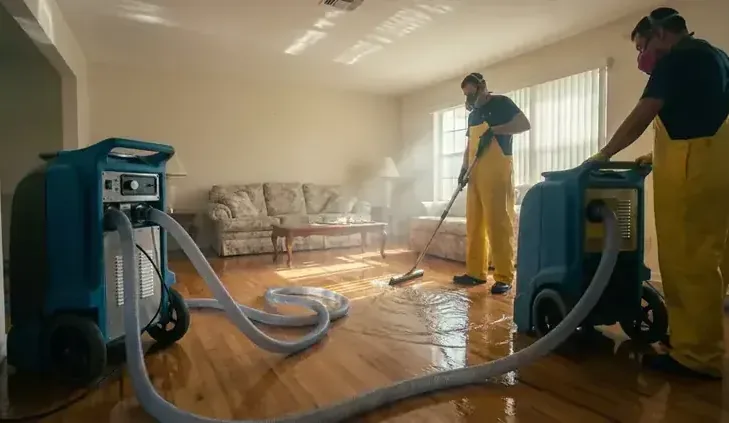
Why the drying plan matters for water extraction and removal
Rapid local response
The response team dispatches 24/7 for active water extraction and removal. The first priority is stopping additional spread and mapping every wet material.
IICRC S500 drying standard
The drying team sizes extraction, air movement and dehumidification to the water category and class of loss, then verifies the drying goal with readings.
Claim-ready documentation
The claim file can include a moisture map, daily psychrometric logs, category and class notes, and timestamped photos before removal begins.
Stanton water experts
The walkthrough follows water along Beach Boulevard, Katella Avenue and Western Avenue properties without assuming that visible staining marks the full loss.
What to do right now for water extraction and removal in Stanton
- Control the source: Shut off the source when safe. The response team confirms that additional water is no longer feeding the loss.
- Protect the area: Keep people away from wet outlets. The crew identifies electrical, ceiling and contamination hazards before entry.
- Preserve evidence: Move dry contents from the water path. Photos and moisture readings establish the initial condition before removal.
- Begin mitigation: Photograph rooms before items move. Extraction and drying follow the category, class and material load found on site.
What does water extraction and removal cost in Stanton, CA?
Typical water extraction and removal ranges from $1,200 to $4,800 for a defined loss. Larger areas, contaminated water, dense materials and delayed drying can raise the scope.
Contained area
- Source controlled
- Extraction
- Standard drying
Extended materials
- More rooms
- Cavity access
- Longer monitoring
Complex scope
- Contamination or dense materials
- Containment
- Detailed documentation
Documentation for your insurance claim
The restoration contractor records the source, category, class, moisture map and daily readings. Sudden and accidental water damage and exterior flooding are treated differently. Coverage depends on the policy, so the property owner should check with the insurer. The Stanton water damage cost calculator offers a planning range.
How crews handle water extraction and removal in Stanton
Inspect and map
The technician identifies the source and traces standing water into flooring, walls, cabinets and adjoining rooms before equipment placement.
Extract and clean
The extraction crew removes bulk water first, performs category-appropriate cleaning and removes porous Category 3 material when required.
Dry the structure
The drying team uses truck-mounted extraction and weighted extraction tools to control evaporation and humidity while protecting unaffected spaces.
Verify and document
Daily readings continue at mapped points until affected materials reach the dry reference goal and the final record is complete.
Water Extraction and Removal in Stanton begins with source control, safety and a complete moisture map. A technician follows standing water through visible finishes and hidden assemblies, then records material readings before extraction or removal begins. Properties near Beach Boulevard, Katella Avenue and Western Avenue receive the same material-by-material inspection because a stain or puddle rarely shows the full boundary.
How water extraction and removal moves through a property
The restoration team matches truck-mounted extraction and weighted extraction tools to the source and material load. The crew removes liquid water first, checks hidden surfaces, controls the drying environment and keeps equipment in place until readings reach the recorded goal.
Water follows gravity, seams and porous materials. The inspection moves from the source toward adjoining rooms, wall bottoms, cabinet bases and the space below. At Stanton Central Park area homes and businesses across Orange County, the same principle applies: the drying boundary comes from meter readings, not from the edge that looks wet.
- The tech records the source, category and class before equipment placement.
- The extraction crew removes recoverable liquid water because extraction is faster than evaporation.
- The drying team sets air movers to the evaporation load and LGR dehumidifiers to control vapor.
- The contractor checks a dry reference material and compares affected materials at consistent points.
Equipment and drying goals for water extraction and removal
Truck-mounted extraction and weighted extraction tools support the work, but equipment count follows the actual class of loss. Class 1 covers limited absorption, while Classes 2 and 3 involve more material or water from above. Class 4 describes dense materials such as concrete or hardwood that release moisture slowly.
The drying goal commonly sits within 2 to 4 moisture-content points of a dry reference material in the same building. The team records temperature, relative humidity and material readings daily. Equipment stays until readings show that affected materials reached the goal, even when the surface feels dry earlier.
- Thermal imaging helps locate temperature patterns but does not replace a moisture meter.
- Pin and pinless meters confirm material moisture at mapped points.
- Air movers increase evaporation across wet surfaces.
- LGR dehumidifiers remove the resulting water vapor from the contained air.
Water Extraction and Removal still active? Dispatch can start with the source and rooms affected.
(888) 563-9619Log this water lossDocumentation and insurance questions
The claim file can include wide and close photos, source notes, the initial moisture map, water category and class, daily psychrometric logs, removal notes and the final dry readings. The property owner keeps damaged-material records until the insurer gives direction. The restoration contractor documents the loss but does not decide coverage.
Sudden and accidental plumbing water is often treated differently from exterior flooding, sewage backup and long-term seepage. The policy language controls. The owner should ask the insurer about the deductible, emergency mitigation, contents documentation and whether prior approval is required for non-emergency reconstruction.
Local planning around Stanton
ZIP 90680 contains dense residential and commercial blocks. The 2020 Census recorded a near-even owner and renter split, so the walkthrough may need to account for adjoining units, shared walls or property management access. Beach Boulevard businesses can also need phased work that keeps unaffected rooms separate from extraction and drying zones.
Orange County directs property owners to official FEMA mapping for property-specific flood risk. Property-specific mapping is required before assigning any flood zone. For an active loss, the crew focuses on current conditions at the building, records what is wet and selects a drying plan from those findings.
Act on the readings
The drying team follows mapped material readings, keeps people away from hazards and changes the plan when the daily log shows a stalled area.
Water extraction and removal across Stanton and Orange County
Stanton Water Damage Restoration covers ZIP 90680 from Beach Boulevard and Katella Avenue to Western Avenue, Dale Avenue, Magnolia Avenue, Stanton Central Park and Lions-Stock Park.
Nearby coverage reaches Anaheim, Cypress, Garden Grove, Tustin, South Gate, Newport Beach, Cudahy, Bell.
Dispatch is available around the clock for active water losses throughout the listed area.
Related water damage services in Stanton
Water Extraction and Removal questions in Stanton, CA
Still dealing with it?
Water Extraction and Removal still active? Dispatch can start with the source and rooms affected.
(888) 563-9619(888) 563-9619Log this water lossHow fast should water extraction and removal begin?
The work should begin as soon as the source is controlled and the area is safe. Early extraction limits migration into wall bottoms, cabinets and adjoining floors.
How long does water extraction and removal take to dry?
A contained Class 1 loss often dries in three to five days. Dense materials, a larger class of loss and delayed extraction extend the window, so readings decide.
What equipment is used for water extraction and removal?
The plan may use truck-mounted extraction and weighted extraction tools, along with moisture meters and containment. Equipment count comes from the affected material load.
Does insurance cover water extraction and removal?
Coverage depends on the source, duration, policy and endorsements. Sudden plumbing water, exterior flooding and sewage backup are treated differently, so the owner should check with the insurer.
What should happen before removal during water extraction and removal?
The contractor photographs the condition, records category and class, maps moisture and explains why a material cannot be dried in place.
Why do daily readings matter during water extraction and removal?
Readings show whether the drying chamber is working and whether framing, subfloor and wall material are approaching the dry reference.
What local details matter for water extraction and removal?
Access, shared walls, adjoining units and business operations matter more than a general neighborhood label. The walkthrough records the building conditions found in ZIP 90680.
Stop standing water from reaching the next material
The response team extracts, dries and records the conditions found across Stanton and ZIP 90680.
(888) 563-9619Start the water moisture map