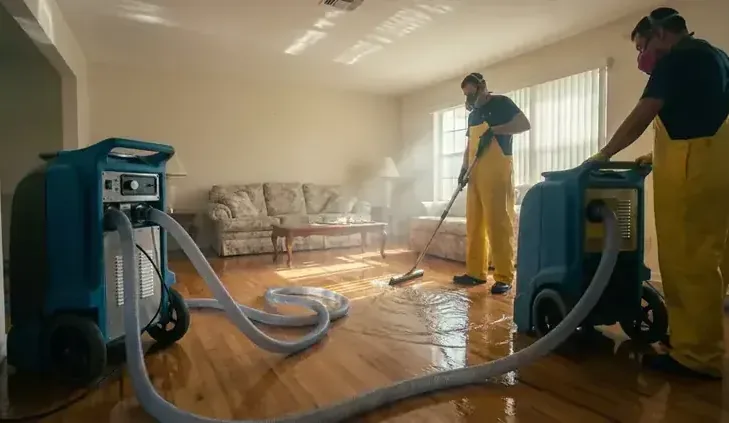
A confirmed water main break at Rancho Alisal Apartments offers a concrete lesson about apartment losses: source control can happen outside while water damage decisions continue room by room inside the buildings.
Key takeaways
- A repaired main does not remove water already absorbed by flooring, walls, cabinets, or contents.
- Each apartment needs its own inspection even when the original release affected a shared property area.
- Vacant rooms still require prompt documentation because no occupant is present to notice changes.
- Extraction should extend to the measured water boundary rather than the deepest visible puddle.
- Repair records, photographs, and moisture logs connect public source work with interior restoration.
What the confirmed event established
On September 8, 2014, a construction crew struck a six inch water main at Rancho Alisal Apartments. Water and mud crossed the property, several vacant apartments flooded, and water service was interrupted to three buildings and 22 apartments.
One room in each of two apartments sustained water damage.
Orange County Fire Authority and Irvine Ranch Water District responded to the break. The response involved both the damaged water supply and the apartment property.
For building managers, the practical lesson is to check each affected unit separately, including vacant rooms where water may go unnoticed.
- The source was a construction related main break.
- Water and mud reached the apartment property.
- Vacant units were among the flooded spaces.
- Interior damage differed from unit to unit.
Why every apartment needs a separate map
Water follows grading, door thresholds, floor seams, and openings unique to each unit. One apartment may receive open floor water while another shows damp wall bases or a smaller isolated section.
A building wide assumption can miss those differences.
The Tustin water extraction service starts with visible water but checks beyond it. Technicians compare room edges, adjacent spaces, and materials of the same type.
That process identifies where extraction ends and structural drying begins without treating every unit as identical.
- Record the entry point for each interior.
- Measure floors at thresholds and wall edges.
- Check the adjoining room before clearing it.
- Label photographs by unit and room.
Vacant rooms create a special discovery problem
An occupied apartment often provides an early report of a wet floor, dripping wall, or changed odor. A vacant room has no resident watching those signs.
Property staff therefore need an organized sweep that does not stop after the first damaged unit is found.
The inspection should note standing water, debris, lifting finishes, wet wall bases, and affected utilities. Photographs taken before extraction preserve the initial condition.
Access times and keys should be tracked so later records show which interiors were inspected and when, without inventing conditions in rooms that remained unavailable.
- Create a list of every accessible unit.
- Record rooms inspected and rooms awaiting entry.
- Photograph vacant interiors before moving material.
- Recheck concealed edges after bulk removal.
Water and mud change the cleanup sequence
A clean pressurized release can collect soil and debris while moving across exterior surfaces. Once that mixture enters a building, cleanup planning considers both water removal and the material carried with it.
The crew removes standing water and loose debris before detailed surface cleaning and drying.
Flooring attachment and porosity matter. Smooth durable material may allow cleaning when every affected face is accessible.
Carpet cushion, wallboard, and layered finishes can hold water or soil out of reach. Selective removal should create access where condition and measurement findings support it, not follow a preset apartment formula.
- Separate loose soil from ordinary wet contents.
- Protect clean corridors during debris movement.
- Inspect beneath edges that trapped dirty water.
- Document why porous material was removed.
Source repair and dryout are separate milestones
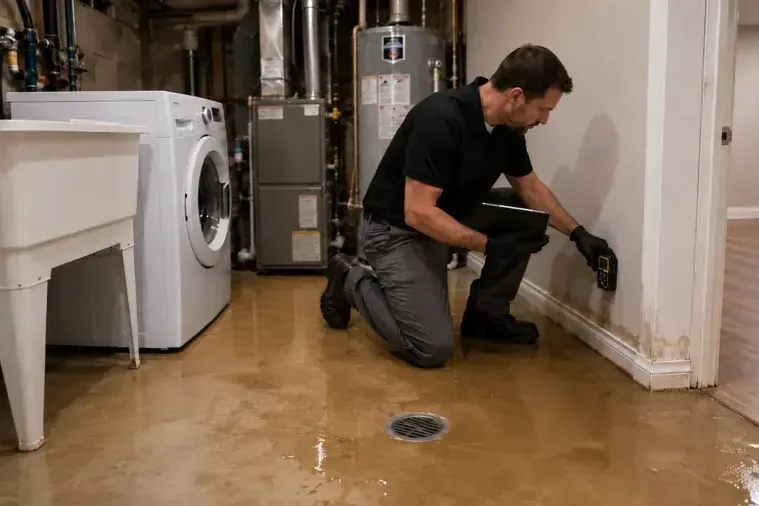
Restoring water service or repairing the main ends the active source problem. Wet apartment finishes still need moisture checks and a drying plan.
Extraction reduces liquid, while air movement and dehumidification address water retained in assemblies.
A main city extraction overview explains that distinction across other water losses. In an apartment event, marked reading locations make it possible to compare each room through the drying period.
Equipment can then be moved toward slower materials rather than left in a uniform arrangement.
- Keep source repair documents with mitigation records.
- Use consistent points for progress measurements.
- Investigate readings that stop improving.
- Confirm dry conditions before replacement work.
Apply the lesson without overstating local risk
Tustin has two principal ZIP codes, 92780 and 92782, and neighborhoods including Tustin Meadows, Peppertree, Laurelwood, Tustin Legacy, and Old Town Tustin. Across those neighborhoods, an inspection follows the current leak from its entry point into connected rooms.
Access to each affected space helps the team record the full water path.
The Tustin service area hub summarizes restoration options for different sources. For any apartment loss, the practical lesson is to organize access, inspect every potentially affected interior, separate source repair from damage treatment, and retain records that explain the room specific work.
- Use the historic event as a process lesson.
- Do not infer parcel risk from a neighborhood name.
- Base removal on current material findings.
- Keep each apartment record distinct.
Plan communication before the next property emergency
The Rancho Alisal event also shows the value of an access plan prepared before water reaches a building. Property staff can maintain current contacts, identify who can authorize entry to vacant apartments, and know where building shutoffs and electrical controls are located.
Preparation improves information flow without promising how quickly an outside event will be resolved.
A simple room log can travel with the response team as interiors are opened. It can show whether a unit was inspected, whether standing water was removed, and whether later monitoring is scheduled.
That record reduces the chance that a quiet vacant room is omitted when attention is focused on the most visible damage.
Prepared labels for rooms and units can also keep photographs from becoming detached from their location during a busy response. Accurate labels make later scope and drying comparisons far easier.
- Maintain current resident and management contacts.
- Know who can authorize vacant unit access.
- Use one room log throughout the property.
- Mark follow up inspections before crews leave.
Questions
Did the Rancho Alisal break affect every apartment equally?
No. The confirmed account says water service was interrupted to three buildings and 22 apartments, while several vacant apartments flooded and one room in each of two apartments was damaged.
Why inspect an apartment that has no visible puddle?
Water may have entered beneath a threshold, along flooring, or inside a wall base without remaining on the surface. Comparison readings can confirm whether that interior stayed outside the affected boundary.
Does main repair finish the cleanup?
No. Repair controls the source. Extraction, cleaning, material decisions, dehumidification, and final moisture checks address the water that already reached the building.
What should property staff document?
Useful records include unit access, room photographs, water entry points, affected materials, source repair information, extraction notes, removed items, and repeat moisture readings.
Can the event establish current flood risk for another property?
No. It was a specific construction related main break. Current property conditions and official flood information are needed for any other location or event.