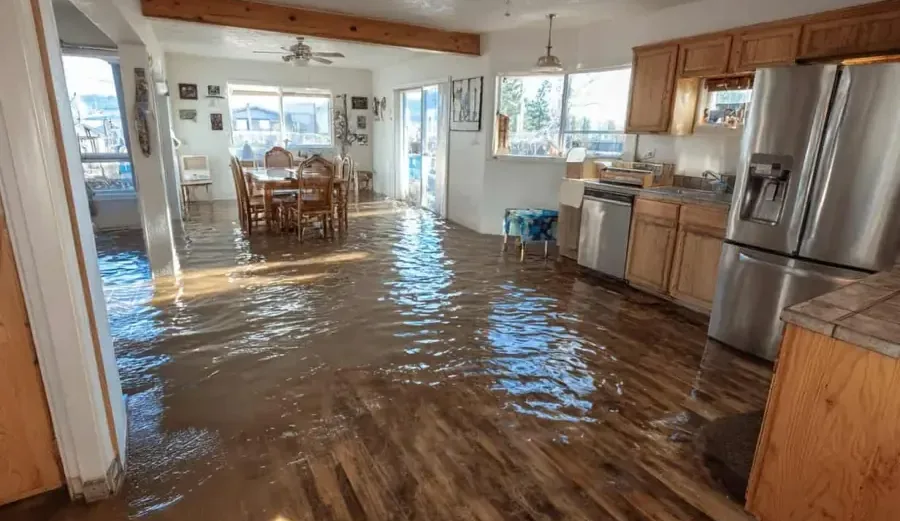
Coastal water crossing a doorway brings more than a wet floor. Debris, salt, hidden moisture, electrical hazards, and changing exterior conditions all affect what can happen inside the building next.
Key takeaways
- Wait for safe access and avoid entering water near electrical equipment or unstable finishes.
- Photograph the exterior entry route and every interior room before extracting water or moving damaged contents.
- Treat outside flood water as contaminated and keep it separate from dry rooms and belongings.
- Inspect wall bases, cabinets, floor layers, and adjoining spaces beyond the visible water mark.
- Use cleaning records and repeat moisture readings to support material and completion decisions.
The October coastal event provides real context
On October 9, 2026, high tide and storm swell flooded streets, homes, and businesses on the Balboa Peninsula. The city declared a local emergency, and officials estimated 15 to 20 blocks of street flooding.
Crews operated pumps, opened tidal valves, and built a sand berm as high surf continued.
That event confirms that flood water entered structures in a named area, but it does not make every building condition identical. Entry height, duration, materials, utilities, and interior layout vary.
The local storm cleanup service therefore begins with the affected building rather than a neighborhood wide assumption.
- Confirm that exterior water is no longer entering.
- Identify electrical and structural hazards before access.
- Photograph doorways, walls, and water marks.
- Keep the property record tied to actual conditions.
Safety and contamination shape the first entry
Exterior flood water can carry soil, waste, fuel residue, and debris. Occupants should not wade through it to retrieve belongings, operate equipment, or reach a switch.
Even after water recedes, slick floors, weakened wallboard, sharp debris, and wet electrical components can remain.
The first controlled entry establishes safe routes and separates the wet zone from protected space. Workers document standing water and visible contamination before moving items.
Porous belongings are sorted by exposure and condition, while dry contents stay outside the cleanup path.
- Keep children and pets outside the affected area.
- Do not energize wet fixtures or appliances.
- Use one protected route for cleanup movement.
- Separate flood contacted contents from dry items.
Remove water without losing the evidence
Wide photographs show how water crossed an opening and moved through connected rooms. Closer images capture debris, staining, floor transitions, cabinet damage, and affected contents.
A measured water mark can also help explain which materials received direct contact.
Once the initial condition is recorded, water extraction in the city can remove reachable liquid. Extraction reduces the load on later drying equipment, but it does not clean contaminated surfaces or reveal every wet layer.
The crew continues checking edges as the puddle disappears.
- Capture the water entry point and room layout.
- Photograph contents before relocation or disposal.
- Extract open water from accessible low sections.
- Reinspect floor edges after the surface clears.
Flooded materials need individual decisions
Carpet cushion, wallboard, insulation, and unfinished composite products can hold contaminated water internally. Where effective cleaning and drying are not possible, controlled removal exposes durable framing or subfloor surfaces for treatment.
Sound materials are not removed merely because they share a room with the loss.
Hard flooring also requires inspection at seams and beneath transitions. Cabinets can trap water behind toe kicks, and wall cavities can remain damp above the visible flood mark through capillary movement.
The scope should name each material retained, cleaned, or removed and explain the observed condition supporting that choice.
- Evaluate porosity and direct flood contact.
- Open wall bases only where findings support access.
- Inspect cabinet bottoms and hidden toe kick spaces.
- Record removed materials by room and location.
Cleaning comes before the final dryout
Flood debris and residue should be removed before airflow is directed across the work area. Reachable durable surfaces receive cleaning suited to their exposure.
Open cavities and floor junctions need attention because sediment can settle at low points beyond the center of the room.
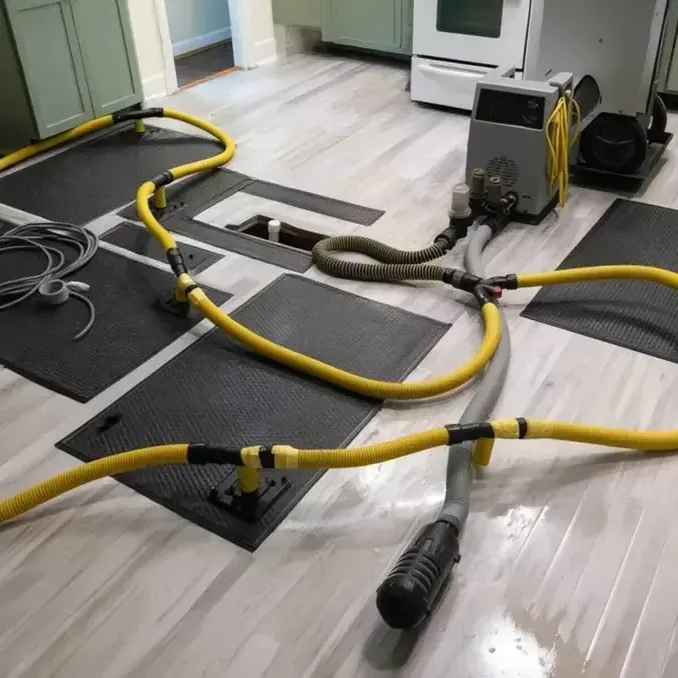
Dehumidification then supports the retained structure. Monitoring locations on framing, subflooring, and walls show whether moisture is leaving the materials.
Equipment adjustments follow those readings. A cleaner appearance or lack of standing water does not by itself demonstrate a dry assembly.
- Remove loose soil before detailed surface work.
- Clean exposed durable components and junctions.
- Place drying equipment around retained wet materials.
- Compare progress at the same marked locations.
Property records continue after the water recedes
A strong file can include event photographs, official notices available to the owner, room inventories, extraction notes, cleaning details, removal records, equipment logs, and final moisture comparisons. Receipts for temporary protection and repair should remain with those documents.
The insurance carrier interprets coverage and may request particular evidence. Restoration records describe the building and authorized work.
The Newport Beach restoration hub connects flood response with roof, ceiling, sewage, commercial, and structural drying services when the source or material needs expand beyond the initial cleanup.
- Keep official event information with property evidence.
- Organize photographs by room and date.
- Retain disposal and cleaning documentation.
- Ask for final drying comparison results.
Prepare for repair without erasing the flood record
Reconstruction can change the evidence that explains a coastal water loss. Before new wall finish, cabinets, or flooring are installed, the owner can preserve photographs of cleaned framing, final moisture comparisons, and the boundaries of removed material.
Those records show the condition that replacement work covered.
Contractors arriving later should know which areas received direct flood contact and which remained outside the cleanup zone. This helps keep new materials away from unfinished sections and prevents clean storage from sharing space with discarded debris.
A room by room handoff also makes remaining electrical, finish, and content tasks easier to assign.
Exterior openings also deserve condition notes after interior mitigation. A damaged threshold, door component, vent, or utility penetration may need a separate repair before the property is ready for another period of rain or high water.
Recording that outstanding work keeps source protection distinct from the completed extraction and dryout inside.
- Photograph cleaned assemblies before they are covered.
- Keep new materials outside unfinished work zones.
- Label repairs by room and affected surface.
- Retain final readings with reconstruction invoices.
Questions
Does the October event prove another parcel will flood?
No. It confirms flooding on the Balboa Peninsula during that event. Property specific risk requires official map information and current site findings rather than assumptions from a neighborhood name.
Can residents enter after outside water drains away?
Receded water does not remove electrical, contamination, debris, or material stability concerns. Safe entry should be established before occupants retrieve items or begin cleanup.
Is extraction enough for coastal flood water?
No. Extraction removes accessible liquid. Contaminated materials, sediment, surface cleaning, cavity access, structural drying, and verification may also be necessary based on the water route.
Which belongings should be discarded?
Material, direct contact, cleanability, condition, and policy requirements affect that decision. Photograph items first, separate them by exposure, and document disposal rather than making unrecorded assumptions.
How is drying completion decided?
Technicians compare repeated readings at marked affected locations with suitable dry materials. Final condition notes show whether retained framing, floors, and walls reached the project goal.