Water Heater Leak Cleanup in Newport Beach, CA
Water escaping from a heater can soak the floor beneath storage and spread through nearby walls. Newport Beach cleanup starts after safe utility isolation and keeps material inspection separate from the tank repair or replacement.
(888) 563-9619Explain the Newport Beach heater release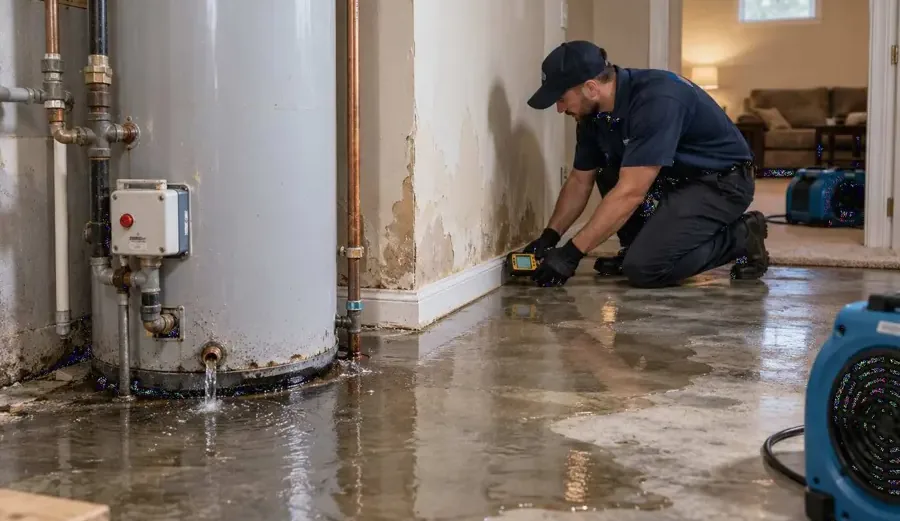
Why the drying plan matters for water heater leak cleanup
Rapid local response
The response team dispatches 24/7 for active water heater leak cleanup. The first priority is stopping additional spread and mapping every wet material.
IICRC S500 drying standard
The drying team sizes extraction, air movement and dehumidification to the water category and class of loss, then verifies the drying goal with readings.
Claim-ready documentation
The claim file can include a moisture map, daily psychrometric logs, category and class notes, and timestamped photos before removal begins.
Stanton water experts
The walkthrough follows water along Beach Boulevard, Katella Avenue and Western Avenue properties without assuming that visible staining marks the full loss.
What to do right now for water heater leak cleanup in Newport Beach
- Stay clear of utility hazards: Occupants should stay clear of wet utility connections and hot water until qualified personnel establish safe access.
- Describe the equipment location: The first report should identify where the tank sits, any surrounding storage and rooms where water has appeared beyond the equipment area.
- Keep replacement access available: The installer and restoration team should coordinate so newly exposed floor and wall surfaces can be inspected before another tank is placed.
- Document affected storage safely: Photographs from a safe position can record wet belongings and nearby finishes before items move, without entering the hazardous area.
What does water heater leak cleanup cost in Newport Beach, CA?
Heater cleanup costs reflect affected storage, wet floors and walls, access and drying requirements. The written scope should distinguish building restoration from equipment replacement, utility work and later finish repairs.
Contained zone
- Tank mapping
- Water removal
- Drying checks
Extended finishes
- Wall inspection
- Material drying
- Progress readings
Complex scope
- Selective removal
- Condition logs
- Tank coordination
Documentation for your insurance claim
The restoration contractor records the source, category, class, moisture map and daily readings. Sudden and accidental water damage and exterior flooding are treated differently. Coverage depends on the policy, so the property owner should check with the insurer. The water damage cost calculator offers a planning range.
How crews handle water heater leak cleanup in Newport Beach
Coordinate safe isolation
The appropriate trade addresses equipment and utility conditions, allowing the restoration team to establish an accessible work area and document surrounding damage.
Trace escaped tank water
Inspection follows moisture beneath storage, along walls and into adjoining flooring, with material access decisions based on the measured route beyond the heater footprint.
Dry the exposed assembly
Extraction and necessary removal prepare retained surfaces for drying equipment, while repeat measurements show where concealed edges or wall bases continue to hold moisture.
Confirm the installation handoff
The record identifies treated materials, final readings and remaining finish repairs so replacement equipment can be scheduled without concealing a section still awaiting inspection or drying.
A water heater release may first become visible beyond the equipment space. Stored boxes, a threshold or an adjoining wall can hide the route water took from the tank or connection. Newport Beach restoration follows those affected materials after the equipment and utilities are made safe. A replacement heater can restore hot water service without resolving the moisture left in the surrounding building.
Let qualified personnel address the utility hazards
Hot water, electrical parts and fuel connections require appropriate attention. Occupants should not step into the wet area to experiment with controls or move the tank. The property contact can report the observed release and any safe isolation already completed. A suitable trade assesses the equipment fault, while restoration planning addresses accessible water and exposed finishes around it.
At a property in West Newport, the inspection needs to establish whether the tank sits in a closet, open utility area or another arrangement. The neighborhood does not determine that layout. Access, stored contents and the available removal route influence how the work can proceed safely.
Inspect the floor beyond the tank footprint
Readings along wall bases and adjacent floor edges help identify water that escaped the immediate source area. Photographs record affected storage before it is moved. Materials hidden beneath shelving or behind the old equipment may only become accessible during removal, so the schedule should allow inspection before the replacement occupies the same space.
- Document water around the tank and its connections.
- Check storage contact with wet floors and walls.
- Follow moisture at the doorway into adjoining finishes.
- Record surfaces newly exposed when the old heater is removed.
A new heater should not conceal an unfinished moisture assessment.
(888) 563-9619Describe the tank and wet surroundingsCoordinate plumbing and restoration without merging their scopes
The plumber or installer handles the equipment work. The restoration crew explains which building materials need extraction, access or drying. Each contractor’s record should make that boundary clear. The Newport Beach extraction service addresses standing water where the release has reached connected rooms beyond the utility space.
In Corona del Mar, a cramped access route may require careful contents movement, while another property may provide an open working area. Those differences are assessed on site. Neither arrangement establishes the full moisture boundary until the accessible floors and wall edges have been checked.
Use the installation interval to verify concealed surfaces
Retained materials need measurements and suitable comparisons after bulk water removal. Equipment placement should serve the actual wet assembly, not simply the former tank location. If moisture remains under a floor edge or inside a wall base, the crew explains the access or monitoring that is still required before new equipment blocks the area.
A property on Lido Isle may involve both an owner and an occupant in access arrangements. The local restoration overview connects related wall and flooring cleanup, while the completion file records removed materials, drying results and separate repair needs. Clear coordination prevents the equipment installation from being mistaken for completion of the building’s water damage work.
Act on the readings
The drying team follows mapped material readings, keeps people away from hazards and changes the plan when the daily log shows a stalled area.
Water heater leak cleanup across Newport Beach and nearby communities
Heater leak cleanup serves Newport Beach properties in West Newport, Corona del Mar and Lido Isle. Qualified utility isolation, storage access and the water’s observed spread determine the building restoration work around the equipment.
The same service nearby: water heater leak cleanup in Stanton, Tustin, South Gate.
Water damage restoration in Newport Beach · every town covered
Dispatch is available around the clock for active water losses throughout the listed area.
Related water damage services in Newport Beach
Water Heater Leak Cleanup questions in Newport Beach, CA
Still dealing with it?
A new heater should not conceal an unfinished moisture assessment.
(888) 563-9619(888) 563-9619Describe the tank and wet surroundingsDoes tank replacement include drying the nearby wall?
Those are separate tasks. The installer addresses the heater, while restoration assesses and dries affected building materials. Coordination keeps access available until the wall condition is documented.
Can a heater release affect rooms outside the utility area?
Yes. Water can move beneath storage or through a doorway into adjoining finishes. The inspection follows observed moisture rather than ending at the tank’s footprint.
Why inspect before the new tank is installed?
Replacement can conceal surfaces that need measurements or drying access. The interval after removal offers an opportunity to document materials previously hidden by the old equipment.
Should occupants operate the heater controls during a leak?
Uncertain utility conditions require qualified attention. Occupants should remain clear of wet electrical parts, fuel connections and hot water instead of entering the affected area to investigate.
What happens to water-contact belongings?
Their exposure and condition are recorded separately from the building. Appropriate handling decisions keep affected contents from being mixed with dry items during equipment and material movement.
How is the restoration completion explained?
The file should identify extraction, removed finishes and drying results for retained materials. Any equipment, source or finish repair outside that completed work should remain clearly listed.
Arrange Newport Beach heater cleanup assessment
After qualified isolation, the crew can inspect connected floors and walls, document access needs and verify the retained materials before equipment replacement closes the utility space.
(888) 563-9619Discuss the utility area water damage