Water Extraction and Removal in Bell, CA
A puddle disappearing beneath furniture can hide a larger wet floor. Bell water extraction starts with safe access, removes reachable liquid and checks the edges that a surface cleanup can miss.
(888) 563-9619Describe the pooled water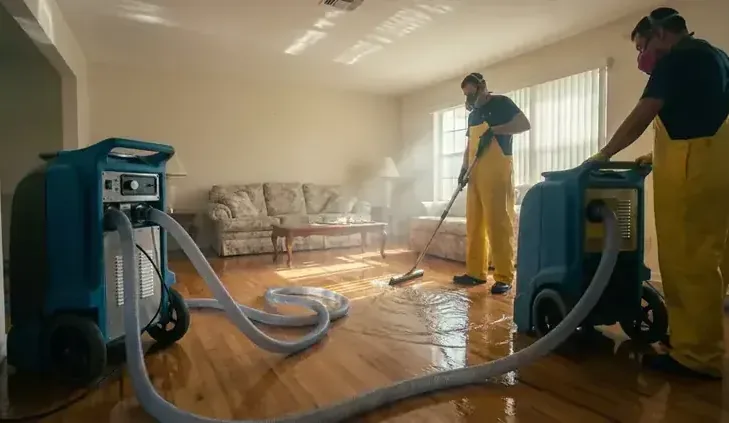
Why the drying plan matters for water extraction and removal
Rapid local response
The response team dispatches 24/7 for active water extraction and removal. The first priority is stopping additional spread and mapping every wet material.
IICRC S500 drying standard
The drying team sizes extraction, air movement and dehumidification to the water category and class of loss, then verifies the drying goal with readings.
Claim-ready documentation
The claim file can include a moisture map, daily psychrometric logs, category and class notes, and timestamped photos before removal begins.
Stanton water experts
The walkthrough follows water along Beach Boulevard, Katella Avenue and Western Avenue properties without assuming that visible staining marks the full loss.
What to do right now for water extraction and removal in Bell
- Keep the route dry: Occupants should stay outside pooled water when wiring, outlets or unstable flooring could make access unsafe.
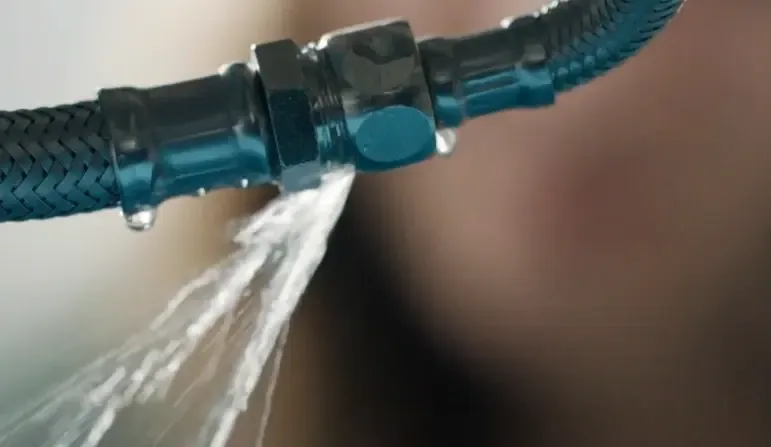
- Identify any continuing release: A familiar shutoff may be used from safety; the crew needs to know whether new water still enters.
- Photograph the visible pool: Safe photographs can preserve floor coverage, wet contents and threshold marks before equipment changes the scene.
- Clear an unaffected space: Dry loose belongings can wait outside the removal route so hoses and wet debris remain separated from storage.
What does water extraction and removal cost in Bell, CA?
Extraction costs depend on reachable water, floor coverings, contamination and access beneath fixed finishes. Inspection distinguishes liquid recovery from the additional cleaning and drying that materials may require afterward.
Open floor recovery
- Pool assessment
- Surface extraction
- Edge readings
Connected room work
- Threshold checks
- Equipment placement
- Moisture mapping
Difficult water access
- Selective opening
- Cleaning records
- Drying coordination
Documentation for your insurance claim
The restoration contractor records the source, category, class, moisture map and daily readings. Sudden and accidental water damage and exterior flooding are treated differently. Coverage depends on the policy, so the property owner should check with the insurer. The water damage cost calculator offers a planning range.
How crews handle water extraction and removal in Bell
Survey the standing water
The crew establishes safe access and notes water depth, surface condition and active flow before selecting the first recovery method.
Recover accessible liquid
Extraction progresses across the affected floor while hoses, belongings and debris remain arranged to protect dry rooms and available exits.
Test the cleared perimeter
Readings beside trim and cabinets identify moisture that the removal tool could not recover directly from the exposed floor surface.
Hand off the drying map
The remaining wet materials, measurement locations and access limits are documented so subsequent drying begins with a defined and reviewable scope.
The deepest water and the widest affected area are not necessarily in the same room. A release can drain toward a doorway while another section absorbs water beneath its finish. An extraction crew needs both observations: where liquid can be recovered now and where damp materials will need attention afterward. Measurements beyond the puddle locate absorbed water at flooring seams and adjoining wall bases.
Read the room before moving its contents
Initial photographs preserve water marks on furniture, the route across thresholds and the condition beneath loose belongings. The crew distinguishes an active release from water left after a shutoff. Electrical exposure, unstable flooring and contamination affect whether the room can be entered and which equipment can be introduced. Dry belongings move to a protected area only when the route is suitable.
Bell's 2010 Census recorded 71 percent of occupied homes as rentals. At a rented property near Bell City Hall, an extraction plan should identify who can authorize access to a connected room. This is an access question, not evidence that water has crossed into another tenancy. The restoration service hub connects removal with the other services a loss may require.
- Record visible pooling before furniture obscures the original route.
- Separate clean storage from the equipment and debris path.
- Identify thresholds where liquid disappears beneath a finish.
Change tools as the water level changes
Open pooling can allow direct recovery, while seams, textured surfaces and the space under fixed fittings require a more focused approach. The extraction crew checks progress as the water drops rather than treating a single pass as completion. Equipment selection follows the surface, debris and available access. A method suited to open flooring may not reach the base of a cabinet or water held within a floor covering.
A home near Bell High School may have several connected rooms, but the actual layout determines the work. Doorways, changes in floor height and occupied spaces all influence hose placement. The crew should keep the exit usable and prevent recovered water or wet debris from entering a room that remained unaffected.
- Inspect the cabinet perimeter after adjacent pooling is removed.
- Revisit low spots where water returns during recovery.
- Record materials that need access beyond the exposed surface.
Standing water removal begins with a safe route into the affected room.
(888) 563-9619Identify the rooms holding waterSeparate extracted water from absorbed moisture
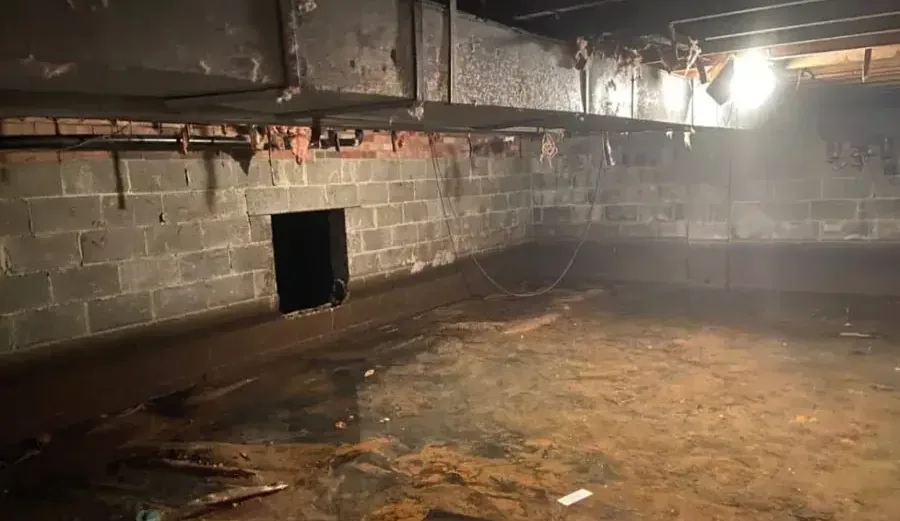
Once the visible floor clears, readings at trim, wall bottoms and adjoining finishes establish what remains. Bell sits on the west bank of the Los Angeles River, but river proximity cannot identify the source of an indoor puddle. A supply leak, appliance release or exterior entry must be evaluated from the property itself. Source findings also shape cleaning decisions before airflow begins.
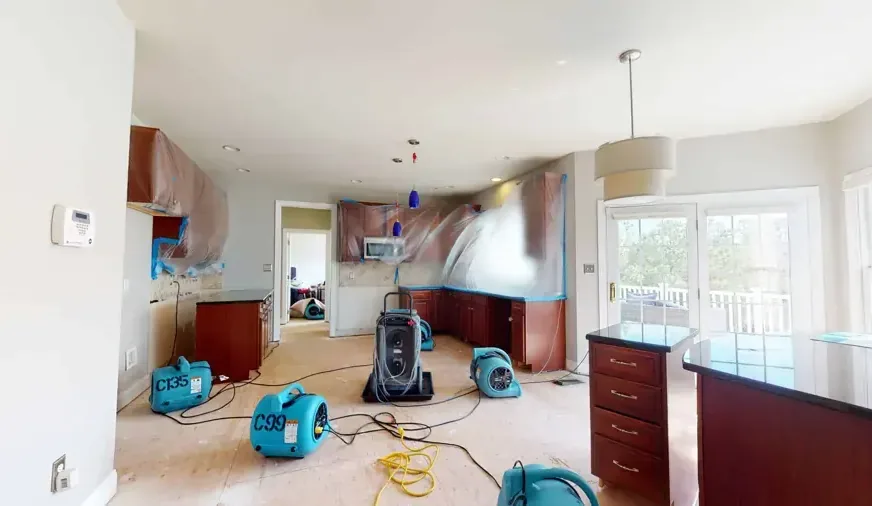
When materials remain damp, structural drying in Bell follows the mapped wet area. That handoff should identify measurement locations and surfaces that cannot yet be reached. A dry central floor does not justify ignoring a damp perimeter, and a damp reading does not automatically require removal of an entire room's finishes.
Leave a useful record of the transition
The extraction record should distinguish recovered liquid, removed items and materials left for drying. Photos after recovery make the exposed floor and wall edges easier to compare with the arrival condition. Any access limitation remains explicit so the next inspection can address it. Final removal decisions belong to the observed condition, not to a standard room package.
Owners and occupants can then see why equipment remains after standing water is gone. The next visit checks the same marked areas, adds access where justified and verifies whether the remaining moisture is moving toward the selected dry reference.
Act on the readings
The drying team follows mapped material readings, keeps people away from hazards and changes the plan when the daily log shows a stalled area.
Water extraction and removal across Bell and nearby communities
Water removal is available for homes, rentals and workplaces in ZIP 90201. Access arrangements, thresholds and the observed depth determine equipment placement, while checks along fixed cabinets establish where drying needs to continue.
The same service nearby: water extraction and removal in Stanton, Cudahy, South Gate.
Dispatch is available around the clock for active water losses throughout the listed area.
Water Extraction and Removal questions in Bell, CA
Still dealing with it?
Standing water removal begins with a safe route into the affected room.
(888) 563-9619(888) 563-9619Identify the rooms holding waterWhat remains after pooled water is removed?
Floor seams, wall bottoms and cabinet edges may still hold absorbed moisture. Readings taken beyond the former puddle show where air movement and vapor removal should continue.
How are extraction tools selected?
Water depth, debris, surface type and access determine the equipment. The crew may change methods as open water drops and smaller pockets become reachable.
Why document the room before pumping?
Initial photographs preserve water marks, content condition and the extent visible on arrival. That record supports later decisions after removal changes the scene.
Can dry belongings stay nearby?
Unaffected items can be moved beyond the work boundary when the route is safe. They should not obstruct equipment or carry wet debris into clean areas.
When is the extraction phase complete?
Recoverable surface water must be gone, but mitigation continues if materials remain damp. Moisture trends determine when the job moves from removal to drying verification.
What areas receive a moisture check?
The team examines the known source room plus connected floors, baseboards and adjoining spaces suggested by the water path, especially where rentals share assemblies.
What helps the crew prepare?
A clear account of the source, deepest pooling and rooms crossed helps equipment arrive with a useful starting plan. Actual placement still follows inspection and measurements.
Keep occupants clear of wet electrical areas
An extraction assessment can distinguish accessible pooling from water retained beneath finishes and explain the next drying steps.
(888) 563-9619Request an assessment of pooled water