Water Heater Leak Cleanup in Bell, CA
A tank release can soak stored boxes and pass beneath a wall before the equipment area is cleared. Bell water heater cleanup coordinates safe source work with extraction and testing beyond the visible pan or base.
(888) 563-9619Describe water around the heater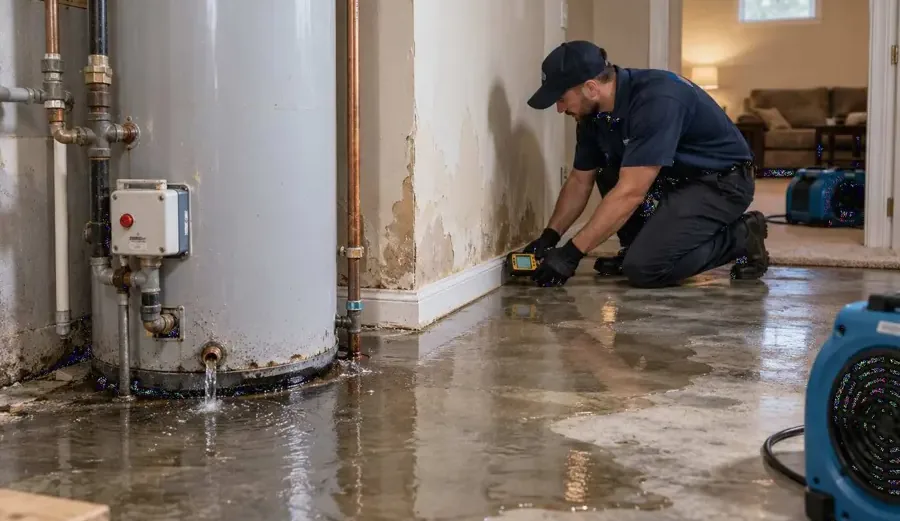
Why the drying plan matters for water heater leak cleanup
Rapid local response
The response team dispatches 24/7 for active water heater leak cleanup. The first priority is stopping additional spread and mapping every wet material.
IICRC S500 drying standard
The drying team sizes extraction, air movement and dehumidification to the water category and class of loss, then verifies the drying goal with readings.
Claim-ready documentation
The claim file can include a moisture map, daily psychrometric logs, category and class notes, and timestamped photos before removal begins.
Stanton water experts
The walkthrough follows water along Beach Boulevard, Katella Avenue and Western Avenue properties without assuming that visible staining marks the full loss.
What to do right now for water heater leak cleanup in Bell
- Treat utilities cautiously: Keep away from wet controls, fuel components and electrical connections until the appropriate professional makes the equipment area safe.
- Use a safe shutoff only: A known water valve may be closed from a dry path, while unfamiliar controls and damaged fittings remain untouched.
- Move dry storage outward: Clear unaffected items from nearby floor space without disturbing soaked boxes or unstable shelving around the tank.
- Look past the closet: Check thresholds, shared walls and the room below for visible signs, then preserve them in photographs for testing.
What does water heater leak cleanup cost in Bell, CA?
Heater leak cleanup costs reflect water spread, stored contents, wall access and floor condition beneath equipment. Tank replacement and utility service should be distinguished from the authorized building restoration scope.
Limited tank area wetting
- Base inspection
- Water extraction
- Wall checks
Adjoining room involvement
- Storage assessment
- Floor access
- Drying records
Concealed equipment area damage
- Material removal
- Trade coordination
- Final comparisons
Documentation for your insurance claim
The restoration contractor records the source, category, class, moisture map and daily readings. Sudden and accidental water damage and exterior flooding are treated differently. Coverage depends on the policy, so the property owner should check with the insurer. The water damage cost calculator offers a planning range.
How crews handle water heater leak cleanup in Bell
Coordinate safe source work
The heater area is assessed for utility and access concerns while the appropriate service provider controls the equipment release and identifies repair needs.
Recover water around storage
The crew documents nearby contents and removes accessible pooling without carrying wet debris into clean rooms or obscuring the original floor water route.
Test concealed perimeter materials
Wall bases, thresholds and the equipment footprint receive checks as access becomes available, with additional rooms included only when the measured spread supports them.
Verify before equipment returns
Retained floor and wall materials are compared with dry references before replacement equipment or stored items conceal the locations that needed monitoring during cleanup.
Water found beside a heater does not always remain beside it. A leaking connection may send water along a wall, while a tank release can cross the floor and disappear beneath stored belongings. The first concern is safe access around the equipment and its utilities. Once the source is controlled, cleanup needs to follow the escaped water rather than stop at the tank footprint.
Make the equipment area safe to inspect
Wet electrical components, fuel connections and unstable stored items can complicate access. Occupants should avoid unfamiliar controls and leave equipment movement to the appropriate professionals. A safe, known water shutoff may limit further release, but restoration work should record the actual source status. Replacing the tank and drying the surrounding room are related tasks with different completion evidence.
For a rental near Bell High School, the property representative can coordinate equipment service and access to the affected room. Bell's large rental share makes an identified contact useful, yet the responsibility for a particular heater depends on the property arrangements. The Bell restoration hub connects this cleanup with broader room or floor drying when water has traveled farther.
- Identify any continuing flow without touching wet utility controls.
- Keep dry storage separate from saturated boxes and floor debris.
- Photograph the pan, base and surrounding water before removal changes them.
Follow water behind storage and wall edges
A drain pan can overflow or fail to catch water from a connection above it. The crew checks the floor perimeter, nearby trim and the opposite side of a wall when accessible and warranted. Stored containers may conceal damp flooring or prevent air from reaching a wet baseboard. Their condition and placement should be recorded before the drying arrangement is finalized.
A property around Bell City Hall may have a closet, utility room or another heater location. None should be assumed from its address or neighborhood. The actual equipment setting determines hose access, removal routes and whether an adjoining space needs readings. Wall edges receive separate readings after the center of the room is clear of water.
- Compare the equipment footprint with moisture at adjacent thresholds.
- Record damaged storage separately from the building finishes.
- Inspect concealed floor sections as safe equipment access becomes available.
A heater replacement can leave the surrounding floor and walls needing restoration.
(888) 563-9619Explain the tank location and water spreadCoordinate replacement with material recovery
Moving a heater may reveal wet flooring that was previously hidden underneath it. That exposed area needs an assessment before a replacement covers the same spot. Clean, sound material may support drying in place; compromised finishes may need removal. The sequence should account for safe utility work and access without treating installation alone as completion of the water loss.
The Los Angeles River is a local water feature, but it has no automatic role in explaining water beside an indoor tank. The source record should name the observed equipment release. If liquid has spread across the accessible floor, water extraction in Bell reduces that load before the remaining wall and floor moisture is addressed.
Verify the less visible parts of the room
Drying checks should revisit the wall base, equipment footprint and any connected room identified during the first inspection. A storage item returned too soon can obscure a measurement point or restrict needed airflow. The closeout should state which materials remain, which were removed and where comparisons supported the drying result.
Photographs taken before the equipment and storage return provide a useful record of areas that will be hidden again. The owner can then distinguish heater service from cleanup, contents handling and structural drying. Any unresolved utility work or inaccessible wet section should remain an explicit next task rather than disappear from the completion account.
Act on the readings
The drying team follows mapped material readings, keeps people away from hazards and changes the plan when the daily log shows a stalled area.
Water heater leak cleanup across Bell and nearby communities
Heater cleanup begins around the equipment location and extends where readings show water spread. Utility clearance, stored belongings and safe equipment movement determine access to wall bases, floor layers and any affected adjoining room.
The same service nearby: water heater leak cleanup in Stanton, Cudahy, South Gate.
Dispatch is available around the clock for active water losses throughout the listed area.
Water Heater Leak Cleanup questions in Bell, CA
Still dealing with it?
A heater replacement can leave the surrounding floor and walls needing restoration.
(888) 563-9619(888) 563-9619Explain the tank location and water spreadWhat hazards surround a leaking tank?
Water may reach electricity, fuel components or unstable stored items. Equipment should be made safe by the proper professional before heavy movement or close access.
Why inspect beyond the drain pan?
A pan can overflow or miss water from a connector. Floor seams, wall bases and thresholds may carry the release into a neighboring space.
Should the tank be moved first?
Moving it can disturb pipe, power or fuel connections and damage wet flooring. Safe utility work and documentation should precede expanded access.
Can nearby storage be restored?
Material and wetting determine that decision. Durable contents may permit cleaning, while saturated paper products can lose condition or block access to damp finishes.
When can replacement occur?
Installation timing should account for safe utility work and surrounding material condition. Closing equipment over wet flooring can hide moisture that still needs drying.
How is the footprint verified?
Readings around the base, walls and connected flooring show whether drying is limited to the utility area or extends into another room.
What information helps the assessment?
The tank location, known shutdown, stored items and signs in adjacent rooms help frame inspection. Utility safety must be resolved before close equipment access or movement reveals the hidden floor.
Keep clear of wet controls and unstable storage
The cleanup assessment can document the equipment footprint and adjoining finishes before replacement or returned belongings conceal areas that still need drying.
(888) 563-9619Arrange a heater water damage assessment