Structural Drying and Dehumidification in Tustin, CA
Different materials in a Tustin room can dry at different rates. Marked moisture readings determine airflow and dehumidification after extraction, with adjustments directed toward the slower wall, floor or cabinet sections.
(888) 563-9619Build a measured drying plan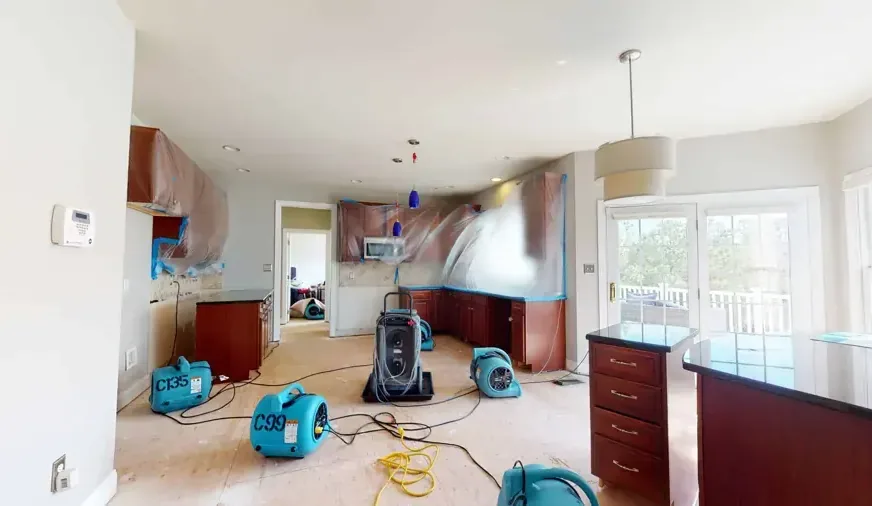
Why the drying plan matters for structural drying and dehumidification
Rapid local response
The response team dispatches 24/7 for active structural drying and dehumidification. The first priority is stopping additional spread and mapping every wet material.
IICRC S500 drying standard
The drying team sizes extraction, air movement and dehumidification to the water category and class of loss, then verifies the drying goal with readings.
Claim-ready documentation
The claim file can include a moisture map, daily psychrometric logs, category and class notes, and timestamped photos before removal begins.
Stanton water experts
The walkthrough follows water along Beach Boulevard, Katella Avenue and Western Avenue properties without assuming that visible staining marks the full loss.
What to do right now for structural drying and dehumidification in Tustin
- Leave equipment positioned: Do not move air movers or dehumidifiers unless a safety issue requires the area to be cleared.
- Keep monitoring points open: Avoid covering marked floor, wall and cabinet locations used for consistent repeat measurements.
- Maintain the planned room: Do not change windows, doors or ventilation before checking how it affects the controlled environment.
- Report new water promptly: A returning leak, backup or rain entry can change the map and requires the drying plan to be reassessed.
What does structural drying and dehumidification cost in Tustin, CA?
Structural drying estimates reflect material density, wet surface area and access to concealed layers. Repeated readings establish progress and equipment needs, so the number of devices alone cannot explain the full project cost.
Contained area
- Structural mapping
- Water removal
- Drying checks
Extended materials
- Material opening
- Local equipment
- Progress tests
Complex scope
- Selective removal
- Condition logs
- Structural coordination
Documentation for your insurance claim
The restoration contractor records the source, category, class, moisture map and daily readings. Sudden and accidental water damage and exterior flooding are treated differently. Coverage depends on the policy, so the property owner should check with the insurer. The water damage cost calculator offers a planning range.
How crews handle structural drying and dehumidification in Tustin
Establish comparisons
The crew identifies wet materials and selects appropriate unaffected locations for meaningful dry references.
Balance air and vapor control
Equipment encourages evaporation while removing released moisture from the managed room environment.
Read individual trends
Repeated checks show which wall, floor, cabinet or framing section responds slowly and needs adjustment.
Document the final goal
Material comparisons and equipment records support removing the setup when tracked assemblies reach target conditions. Final readings remain associated with the same material locations used throughout monitoring.
Older planned neighborhoods such as Tustin Meadows and Laurelwood differ from development at Tustin Legacy, but a neighborhood name cannot specify the wet assembly. Structural drying begins with measurements of the actual floor, wall or cabinet. Equipment placement follows those findings after extraction and removal leave the retained material accessible.
A moisture map defines the working assembly
Technicians mark wet flooring, wall sections, cabinets or framing and choose suitable unaffected comparison points. The same material can behave differently when it is layered, coated or enclosed. A map keeps attention on confirmed absorption rather than an entire room by default.
- Readings use consistent points so later results can be compared.
- Material type is recorded separately from visible staining.
- Openings are added only where access or condition requires them.
- Dry zones stay protected from equipment paths and removed debris.
Air movement and dehumidification perform different jobs
Airflow encourages moisture to leave a surface. Dehumidification collects vapor released into the controlled room. Both need balance: strong air without useful vapor removal can leave humidity elevated, while a dehumidifier cannot overcome a sealed wet cavity that receives no access.
The local structural drying service changes placement as readings reveal faster and slower areas. A cabinet edge may need redirected airflow after an open wall section has already improved.
Drying decisions should follow each material trend.
(888) 563-9619Ask where monitoring points are markedOccupied buildings need an organized layout
Cords, containment and equipment should preserve clear movement through unaffected space. In rentals or businesses, property contacts need current information about active rooms, completed rooms and access changes. The setup should protect people without sacrificing the conditions needed for drying.
- Windows and doors follow the planned environment rather than personal preference.
- Monitoring points remain uncovered and available for repeat visits.
- New leakage is reported because it can reset a material trend.
- Equipment changes stay documented by room and purpose.
Completion belongs to the material
Room humidity can support interpretation, but final decisions rely on the tracked assembly. Readings at the same spots are compared with dry references appropriate to the material. One floor layer may finish before the wall or cabinet beside it.
The local restoration overview shows where extraction, leak cleanup and drying connect. Final records identify starting conditions, equipment changes, access decisions and measured results for each material included in the scope.
Drying data becomes more useful when each reading has a consistent location and material description. A number from drywall cannot be compared casually with one from concrete or a wood cabinet. The record should identify the assembly, the spot and the reason it remains in scope. If a finish is removed, the newly exposed layer receives its own baseline rather than inheriting the earlier surface result. This discipline makes progress reports easier to understand and prevents a fast drying material from hiding a slower layer behind it. It also shows why a device moved even when the room still contained other equipment.
Daily room observations add context without replacing the material measurements used for final decisions.
Act on the readings
The drying team follows mapped material readings, keeps people away from hazards and changes the plan when the daily log shows a stalled area.
Structural drying and dehumidification across Tustin and nearby communities
Drying services reach Rancho Alisal, Columbus Square and Greenwood. Every setup accounts for actual materials and room use, preserving access to marked test points so progress can be compared throughout the work.
The same service nearby: structural drying and dehumidification in Stanton, Newport Beach, South Gate.
Dispatch is available around the clock for active water losses throughout the listed area.

Structural Drying and Dehumidification questions in Tustin, CA
Still dealing with it?
Drying decisions should follow each material trend.
(888) 563-9619(888) 563-9619Ask where monitoring points are markedHow is drying different from extraction?
Extraction removes recoverable liquid. Drying addresses moisture retained inside materials after open water is gone.
Why use dry comparison points?
Comparable unaffected material provides context for a wet reading and avoids applying one universal target to every assembly.
Can equipment move during the project?
Yes. Readings may show a slower wall, cabinet or floor area that needs redirected airflow or access.
Should windows stay open?
Unplanned outdoor air can disrupt humidity control and containment. Window position follows the selected drying environment.
Does more equipment always dry faster?
No. Performance depends on balanced airflow, vapor removal, access and the response of the actual material.
What supports equipment removal?
Marked locations must show acceptable trends and final comparisons documented for the assemblies included in scope.
Why does each material need its own monitoring history?
Drywall, wood products, concrete and insulation hold moisture differently, so one trend cannot represent every layer. Consistent locations and material labels show which assembly is improving, which needs better access and which has reached an appropriate comparison. The history also prevents a newly exposed layer from being judged by readings collected earlier at the removed surface. Each assembly keeps a clear starting point, trend and final comparison.
Keep the controlled room arrangement stable
A floor can reach its target while a nearby cabinet remains damp. Recorded measurements show which devices can move and which material still needs access, airflow or further monitoring.
(888) 563-9619Arrange structural drying measurements