Burst Pipe Water Damage in Bell, CA
Closing a valve changes the flow, not the moisture already inside a wall. Bell pipe leak restoration traces the release from the repaired section into cabinets, ceilings and connected flooring before setting the drying boundary.
(888) 563-9619Identify the failed pipe area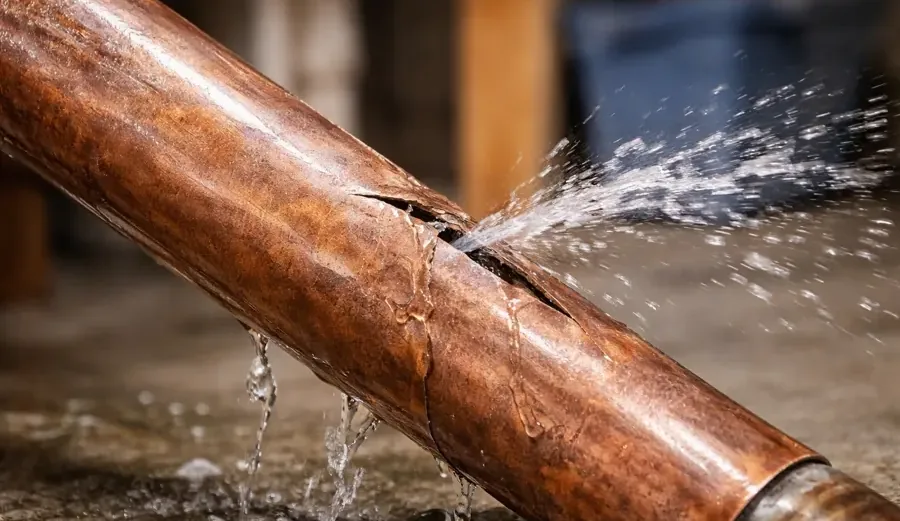
Why the drying plan matters for burst and pinhole pipe leaks
Rapid local response
The response team dispatches 24/7 for active burst and pinhole pipe leaks. The first priority is stopping additional spread and mapping every wet material.
IICRC S500 drying standard
The drying team sizes extraction, air movement and dehumidification to the water category and class of loss, then verifies the drying goal with readings.
Claim-ready documentation
The claim file can include a moisture map, daily psychrometric logs, category and class notes, and timestamped photos before removal begins.
Stanton water experts
The walkthrough follows water along Beach Boulevard, Katella Avenue and Western Avenue properties without assuming that visible staining marks the full loss.
What to do right now for burst and pinhole pipe leaks in Bell
- Close only a known valve: Source control is useful when the shutoff and path are safe; uncertain plumbing or wet electricity calls for professional help.
- Avoid the damaged section: Do not restore water use until the appropriate trade confirms the failed pipe has been repaired and can remain under pressure.
- Preserve the release scene: Photograph the break, wall opening, cabinet water and floor spread before extraction alters the visible path.
- Clear connected rooms: Move dry items away from adjoining walls so technicians can test trim, flooring and concealed edges without obstruction.
What does burst and pinhole pipe leaks cost in Bell, CA?
Pipe water damage costs follow the rooms reached, concealed absorption and access needed after source repair. Wall openings, cleaning and retained material drying determine the authorized restoration scope for the property.
Limited pipe release
- Source documentation
- Floor extraction
- Wall readings
Connected room damage
- Cavity inspection
- Drying setup
- Repeat checks
Concealed multiroom spread
- Targeted removal
- Access coordination
- Completion photographs
Documentation for your insurance claim
The restoration contractor records the source, category, class, moisture map and daily readings. Sudden and accidental water damage and exterior flooding are treated differently. Coverage depends on the policy, so the property owner should check with the insurer. The water damage cost calculator offers a planning range.
How crews handle burst and pinhole pipe leaks in Bell
Confirm the plumbing status
The restoration assessment begins with the known repair and any remaining flow, then records the condition visible around the exposed pipe section.
Locate the concealed spread
Measurements extend through adjoining wall bases, flooring and cabinets where the release could have traveled before anyone discovered the failed plumbing.
Open and dry selectively
Retained assemblies receive an access plan suited to their wet condition, while damaged material removal is recorded before airflow and dehumidification proceed.
Prepare a repair handoff
The owner receives moisture comparisons and photographs that separate the corrected pipe from the building materials dried or removed during the restoration work.
A repaired fitting can sit beside a wall that is still wet inside. Water released under pressure may have reached a ceiling bay or traveled behind a cabinet before it became visible. The restoration question is therefore wider than whether the pipe now holds water. Each connected material needs an assessment that explains what can stay, what needs access and how drying will be verified.
Preserve the route that the repair exposed
Before an opening is closed, photographs can record the failed section and any damp material around it. Plumbing notes help identify the source, while restoration readings establish the affected building area. These records serve different purposes. A successful plumbing repair does not show that nearby insulation, wallboard or flooring has returned to a suitable moisture condition.
Bell's history includes growth between 1920 and 1935, but a construction date or pipe material should not be assigned to a property from that history. Near Bell City Hall, the inspection must rely on the installed plumbing and present damage. The Bell restoration hub links pipe losses with the services needed when water has spread into other assemblies.
- Record whether the leak was active when discovered.
- Photograph the repair opening before finishes cover it again.
- Note any wet cabinet or ceiling connected to the failed section.
Trace pressure water through connected finishes
A narrow opening can release water over time without creating an obvious flood. Trim may darken before the center of a room feels wet, and a cabinet base can hide the route into flooring. The crew checks these transitions rather than drawing the work boundary around the repaired pipe. Readings from comparable dry material help distinguish a wet extension from an unrelated surface mark.
A rented home around Bell High School may require permission to inspect a neighboring space when the release reaches a shared assembly. Bell's 2010 housing figures show a large rental share, making a clear access contact useful. The walkthrough identifies connected rooms and shared plumbing access so the property contact can arrange entry where the water path needs checking.
- Check both sides of a wall when access and the water pattern support it.
- Keep unaffected contents away from the cavity opening.
- Identify each room reached instead of treating the entire property alike.
A stopped pipe can leave damp cavities behind the repaired opening.
(888) 563-9619Describe the shutoff and repair statusMatch cavity access to the retained materials
Wall openings should serve a defined purpose, such as removing unsuitable insulation or making a damp section available for drying. The decision depends on condition, contamination and measurable access. Broad demolition is not a substitute for inspection, while leaving every finish intact can conceal water that equipment cannot reach. The scope should explain the balance for each affected assembly.
The city occupies part of the former Rancho San Antonio, yet that historical setting does not determine how a present wall is built. If a pipe release reached overhead material, ceiling leak restoration may need to address the room below as well. Source control, safe access and moisture verification should remain coordinated across those areas.
Verify drying before concealing the evidence
Repeated readings at the same wall and floor locations show whether retained materials are improving. Equipment moves when the wet boundary or drying response justifies a change. The record should identify any section that remained inaccessible and distinguish an unresolved moisture issue from finish damage that merely needs reconstruction.
Final photographs and material comparisons give the owner a clear handoff after mitigation. They also help explain why drying may continue after a plumber leaves. Reconstruction should account for the documented condition of the exposed assembly, with source repair and restoration listed as separate completed tasks rather than one vague description of a fixed leak.
Act on the readings
The drying team follows mapped material readings, keeps people away from hazards and changes the plan when the daily log shows a stalled area.
Burst and pinhole pipe leaks across Bell and nearby communities
Pipe release assessments follow the failed component through connected walls, flooring and cabinets. Property access and the measured wet boundary determine which rooms require restoration, without assumptions about neighborhood pipe age, materials or construction.
The same service nearby: burst and pinhole pipe leaks in Stanton, Cudahy, South Gate.
Dispatch is available around the clock for active water losses throughout the listed area.
Burst and Pinhole Pipe Leaks questions in Bell, CA
Still dealing with it?
A stopped pipe can leave damp cavities behind the repaired opening.
(888) 563-9619(888) 563-9619Describe the shutoff and repair statusWhat is the safest first action?
A known valve may be closed when the route is dry and clear. Occupants should avoid wet electrical areas or damaged finishes while seeking source repair.
Can a pinhole wet another room?
A small opening can release water long enough to reach continuous flooring, cabinets or a wall cavity. Nearby spaces deserve checks when the path supports them.
Why inspect after the pipe is repaired?
Repair stops new flow but does not remove absorbed water. Restoration measurements identify which materials still need extraction, access or controlled drying.
When is drywall opened?
The choice follows moisture data, finish condition, contamination and access. Broad removal is unnecessary when limited access can expose the confirmed wet section.
What establishes the cause of a pipe failure?
The plumbing inspection and observed failed component establish the source record. The restoration team follows the resulting water route without assuming a citywide pipe material or weather cause.
What belongs in the completion record?
Source information, initial photographs, cavity access, moisture trends and final comparisons explain how the repaired pipe related to the finished mitigation area.
What if water reached stored contents?
Items should be photographed and separated by condition when handling is safe. Wet belongings must not block wall or floor access needed to trace the release and measure remaining moisture.
Keep the exposed section available for documentation
A connected room assessment can identify which walls and floors still require access, water removal or drying before finish repairs begin.
(888) 563-9619Arrange a pipe water damage assessment