Slab Leak Water Damage in Bell, CA
Raised floor seams do not reveal which pipe failed. A Bell slab leak assessment connects plumbing findings with moisture readings, then plans access to the flooring and wall edges actually affected by the release.
(888) 563-9619Discuss unexplained floor dampness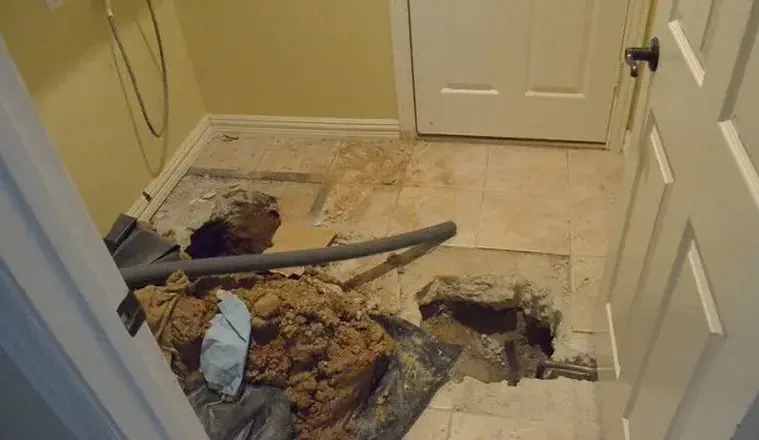
Why the drying plan matters for slab leak water damage
Rapid local response
The response team dispatches 24/7 for active slab leak water damage. The first priority is stopping additional spread and mapping every wet material.
IICRC S500 drying standard
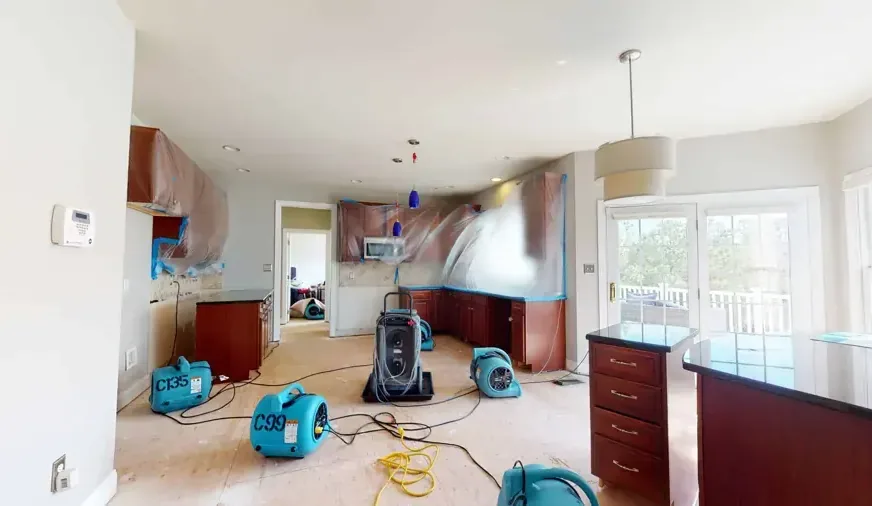
The drying team sizes extraction, air movement and dehumidification to the water category and class of loss, then verifies the drying goal with readings.
Claim-ready documentation
The claim file can include a moisture map, daily psychrometric logs, category and class notes, and timestamped photos before removal begins.
Stanton water experts
The walkthrough follows water along Beach Boulevard, Katella Avenue and Western Avenue properties without assuming that visible staining marks the full loss.
What to do right now for slab leak water damage in Bell
- Limit suspected water use: Reduce use of the connected fixture when practical, without operating an unfamiliar valve or crossing a wet electrical area.
- Keep finishes intact initially: Avoid lifting flooring or cutting wall bases until measurements and plumbing findings establish the useful access points.
- Record the floor pattern: Photograph raised seams, darkened edges or changing trim and note when each sign became noticeable.
- Clear testing locations: Move dry loose items so the center, perimeter and adjoining floor can be compared without hidden sections.
What does slab leak water damage cost in Bell, CA?
Slab leak restoration costs reflect floor access, retained layers, wall involvement and drying duration. Plumbing repair and replacement finishes should be identified separately when the authorized work scope is discussed.
Limited floor damage
- Floor readings
- Water recovery
- Drying checks
Several wet layers
- Finish access
- Substrate assessment
- Progress records
Extensive concealed spread
- Selective removal
- Wall testing
- Trade coordination
Documentation for your insurance claim
The restoration contractor records the source, category, class, moisture map and daily readings. Sudden and accidental water damage and exterior flooding are treated differently. Coverage depends on the policy, so the property owner should check with the insurer. The water damage cost calculator offers a planning range.
How crews handle slab leak water damage in Bell
Reconcile source information
Plumbing observations and the timing of floor changes establish the starting investigation without assuming the location of every concealed wet area.
Chart the material layers
The assessment separates finished flooring, underlayment and adjacent walls so readings can identify where additional access would serve a specific purpose.
Track drying beneath finishes
Equipment and any justified openings address the damp layers while repeat measurements show whether retained materials continue moving toward the selected goal.
Record the substrate condition
Completion notes identify tested locations and remaining limitations before another trade covers the floor or installs replacement trim across the affected area.
A damp baseboard and a lifted floor seam may belong to the same release, even when no water is visible between them. They may also have different causes. Slab leak restoration begins by resolving that uncertainty with plumbing information and a mapped floor assessment. Opening a floor merely because it feels damp can create disruption without locating the source or the full drying need.
Connect plumbing findings to a floor map
The appropriate plumbing professional diagnoses the pipe failure and controls additional flow. The restoration assessment records which rooms show changes and where measurements differ from comparable unaffected material. A sketch can identify cabinets, transitions and wall edges that interrupt the apparent wet pattern. Photos of lifted seams or changed trim are useful alongside readings, but appearance alone cannot prove a buried leak.
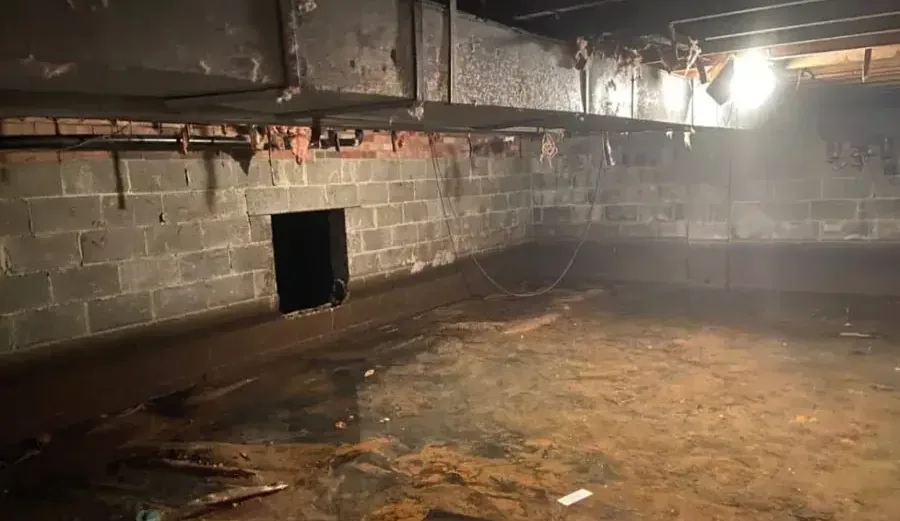
Bell occupies land that was part of Rancho San Antonio. That history does not identify the foundation beneath a particular house. An assessment near Bell City Hall must establish the building's actual construction before applying an underfloor drying approach. The Bell water damage overview provides the other source categories when inspection points away from a slab related release.
- Identify the location of confirmed plumbing work separately from wet finishes.
- Compare floor centers with edges beneath trim and fixed cabinets.
- Mark inaccessible areas instead of treating them as dry.
Plan openings around what can be recovered
Flooring attachment, adhesive condition and the accessibility of trapped water affect whether a finish can remain. Selective removal may expose a saturated underlayer or create a route for drying. Another section may remain intact when it is sound and progress can be measured. The decision should name the material and reason, avoiding an unexplained instruction to remove every finish in the room.
For a rental near Bell High School, access and authorization should be arranged before flooring is lifted. The work record can distinguish occupant observations from plumbing findings and the contractor's moisture measurements. This helps the people responsible for the property understand which opening served source repair and which served restoration.
- Photograph the condition at each planned access location.
- Protect unaffected flooring along the path used for removal.
- Record whether an opening reveals additional damp material.
A changed floor surface deserves a source diagnosis and a measured inspection.
(888) 563-9619Describe the flooring that changedFollow moisture through the floor assembly
Concrete, underlayment, wood and wall bottoms do not necessarily release moisture together. After the pipe repair, the drying team checks the same marked materials to see which layer continues to hold water. A clear surface is not enough if readings indicate moisture underneath. Conversely, progress in one layer does not justify assuming a neighboring wall needs the same equipment or removal.
The Los Angeles River is part of Bell's geography, but it cannot explain an indoor floor condition without supporting property findings. Source attribution stays tied to the diagnosed release. Where dampness extends beyond the initial floor opening, structural drying should account for adjoining finishes rather than simply placing equipment beside the repair trench.
Prepare the floor for the next trade
Before replacement material covers the area, the completion record should identify retained layers, measurement locations and any unresolved access issue. The floor installer may need its own assessment of the substrate and product requirements. Restoration documentation describes the condition reached; it does not substitute for every installation decision or promise that every damaged finish can be reused.
A useful closeout also separates pipe repair invoices from extraction, removal and drying records. Each describes a different part of the loss. Together with photographs, that distinction helps the owner understand what has been corrected, what has dried and what remains for reconstruction after mitigation ends.
Act on the readings
The drying team follows mapped material readings, keeps people away from hazards and changes the plan when the daily log shows a stalled area.
Slab leak water damage across Bell and nearby communities
Underfloor damage assessments address the actual foundation and plumbing findings at each property. Floor access and measurements around fixed cabinets determine the restoration boundary, with connected rooms included when the moisture pattern supports further inspection.
The same service nearby: slab leak water damage in Stanton, Cudahy, South Gate.
Dispatch is available around the clock for active water losses throughout the listed area.
Slab Leak Water Damage questions in Bell, CA
Still dealing with it?
A changed floor surface deserves a source diagnosis and a measured inspection.
(888) 563-9619(888) 563-9619Describe the flooring that changedDoes damp flooring identify a buried leak?
A plumbing investigation locates the source before the repair scope is set. Plumbing findings, a moisture pattern and recent water use help distinguish a slab related release from another cause.
Why map the floor before opening it?
A grid of readings shows the center and edges of the damp area. That evidence can limit disruption and point drying toward the finishes actually reached.
Who performs the pipe repair?
A suitable plumbing professional diagnoses and repairs the failed pipe. Restoration addresses water above the slab, wet materials and the measured drying scope.
Can concrete hold moisture after shutoff?
Yes. The slab, adhesive, underlayment and finished floor can release retained water at different rates even after no new water enters.
Must all flooring be discarded?
Condition, attachment, contamination and access govern that choice. Stable materials may support monitored drying, while swelling or trapped water can make removal necessary.
How is the end point confirmed?
Technicians repeat readings at the same marked floor locations and compare them with suitable unaffected areas instead of judging by surface appearance alone.
What details are useful before arrival?
Changes in floor appearance, plumbing observations and when dampness was first noticed provide context. They do not replace testing across the full affected room.
Keep damaged seams available for assessment
The restoration scope can connect the repaired pipe with damp layers and targeted drying without assuming every floor requires removal.
(888) 563-9619Request an underfloor moisture assessment