Structural Drying while Dehumidification in Cudahy, CA
Different materials release absorbed water at different rates. Cudahy structural drying assigns monitoring points to retained floors, walls and framing, then adjusts air movement and dehumidification as the readings change.
(888) 563-9619Build a measured drying plan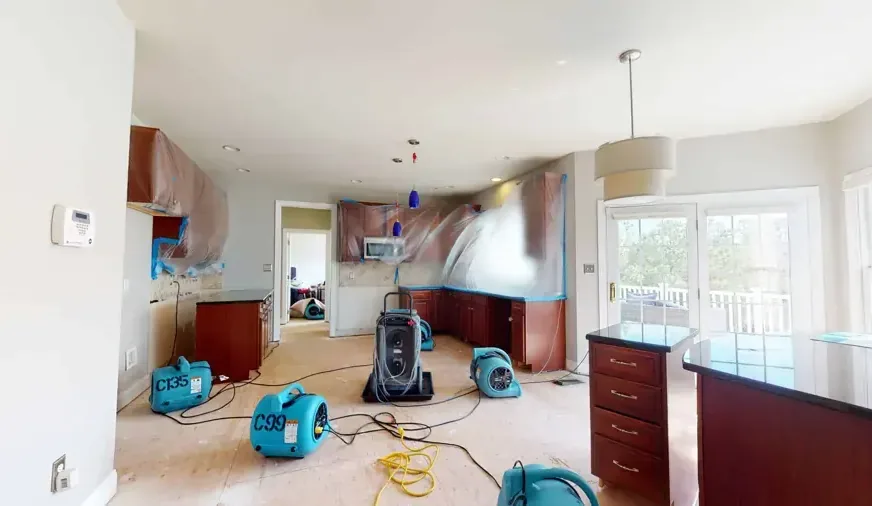
Why the drying plan matters for structural drying and dehumidification
Rapid local response
The response team dispatches 24/7 for active structural drying and dehumidification. The first priority is stopping additional spread and mapping every wet material.
IICRC S500 drying standard
The drying team sizes extraction, air movement and dehumidification to the water category and class of loss, then verifies the drying goal with readings.
Claim-ready documentation
The claim file can include a moisture map, daily psychrometric logs, category and class notes, and timestamped photos before removal begins.
Stanton water experts
The walkthrough follows water along Beach Boulevard, Katella Avenue and Western Avenue properties without assuming that visible staining marks the full loss.
What to do right now for structural drying and dehumidification in Cudahy
- Keep equipment undisturbed: Leave placed air movers and dehumidifiers where assigned unless a safety problem requires the area to be cleared.
- Limit open windows: Do not change doors, windows or ventilation without checking the drying plan because outdoor air can alter controlled conditions.
- Protect monitoring points: Avoid covering or moving marked floor and wall locations that technicians use to compare moisture over time.
- Report new water: Notify the team if a source returns, a drain backs up or rainfall enters so the plan can be reassessed.
What does structural drying and dehumidification cost in Cudahy, CA?
Drying cost follows wet surface area, material density, access and the time shown by measurement trends. Equipment count alone does not define the scope.
Contained zone
- Structural mapping
- Water removal
- Drying surveys
Extended surfaces
- Assembly access
- Humidity control
- Progress checks
Complex scope
- Selective removal
- Condition notes
- Structural coordination
Documentation for your insurance claim
The restoration contractor records the source, category, class, moisture map and daily readings. Sudden and accidental water damage and exterior flooding are treated differently. Coverage depends on the policy, so the property owner should check with the insurer. The water damage cost calculator offers a planning range.
How crews handle structural drying and dehumidification in Cudahy
Establish material baselines
The crew identifies each wet assembly and selects unaffected comparison points appropriate to wood, drywall, concrete or other present materials.
Balance air and humidity
Equipment placement encourages evaporation while dehumidification removes released vapor from the controlled environment.
Read the trend
Measurements at the same marked locations show which materials are responding and where access or air distribution should change.
Document the dry goal
Final comparisons and equipment records support removing the setup when the tracked assembly reaches its established target.
Repeat measurements inside accessible assemblies show whether the drying equipment is reaching retained moisture. Structural drying in Cudahy begins with the moisture that remains after extraction and source control. The team identifies retained materials, selects useful comparison locations and establishes a monitoring plan. That record makes it possible to distinguish a responding wall from a floor layer that still needs better access.
Assign a goal to each material
Wood, wallboard, concrete and layered flooring do not behave as one uniform surface. Readings need to be interpreted for the material being tested and compared with a suitable reference. An unaffected area of the same assembly can help show normal conditions. A single room average can conceal a stubborn wet edge, so the map keeps locations identifiable.
Properties around Elizabeth Learning Center, Park Avenue Elementary School and Jaime Escalante Elementary School are part of the service area. Cudahy's dense occupied setting makes equipment placement and adjoining space access relevant, but no townwide construction assumption determines the targets. The building inspection supplies those details.
- Identify the material at every monitoring location.
- Record initial readings before equipment changes conditions.
- Keep dry reference points distinct from affected points.
- List cavities that require permission or additional access.
Balance evaporation with moisture removal
Air movement helps wet surfaces release moisture, while dehumidification removes that vapor from the controlled environment. More air movers alone cannot resolve every limitation. An enclosed layer may need access, and an ongoing leak may replace water as quickly as equipment removes it. Changes should address the reason for poor progress rather than simply increasing equipment.
Doors, windows and ordinary building use can alter the drying environment. The plan should explain which boundaries need to remain in place and how occupants can move through unaffected areas. Equipment cords and drains require safe routes that do not block necessary access.
- Direct airflow toward the remaining wet material.
- Check for renewed entry when readings rise unexpectedly.
- Keep equipment adjustments connected to recorded observations.
Make each drying decision traceable to a material reading.
(888) 563-9619Ask which surfaces remain above their targetsUse trends to decide the next action
Repeat measurements work best when taken at the same marked locations. Wall readings and cabinet underside readings are tracked separately so slow areas remain visible in the record. The team compares individual trends and adjusts the layout as faster materials finish. Slow progress may justify a closer inspection of trapped moisture, restricted airflow or a covering that prevents evaporation.
The water extraction service handles recoverable liquid before this phase. If another pool appears during drying, the cause needs investigation rather than being treated as normal evaporation. Source control and drying records should remain linked throughout the work.
Close the work by assembly, not by appearance
Completion documents identify the original wet locations, the comparison method and the final readings. They should also describe removed materials and spaces that could not be checked. This gives the next repair trade a specific condition record instead of a broad statement that the building feels dry.
In rental properties, the responsible contact can use that record to coordinate access and later finish work. A unit that has not been inspected should remain separate from areas verified complete. The Cudahy restoration service list connects source cleanup when the inspection reveals another appliance, pipe or roof issue. Each completed drying zone remains tied to its own measured materials.
Act on the readings
The drying team follows mapped material readings, keeps people away from hazards and changes the plan when the daily log shows a stalled area.
Structural drying and dehumidification across Cudahy and nearby communities
Drying service reaches Cudahy properties near Elizabeth Learning Center, Park Avenue Elementary School and Jaime Escalante Elementary School. Equipment arrangements account for occupied areas while separate material readings track progress through the affected structural assemblies.
The same service nearby: structural drying and dehumidification in Stanton, Bell, South Gate.
Dispatch is available around the clock for active water losses throughout the listed area.
Structural Drying and Dehumidification questions in Cudahy, CA
Still dealing with it?
Make each drying decision traceable to a material reading.
(888) 563-9619(888) 563-9619Ask which surfaces remain above their targetsWhy is extraction different from drying?
Extraction removes recoverable liquid. Drying addresses moisture absorbed into structural materials after surface water is gone, using airflow, dehumidification and measurement. Dense finishes can respond slowly even when adjacent drywall changes quickly, so each material needs its own trend. Material readings are compared with the drying goal alongside room humidity measurements. Material changes remain separately recorded.
How are dry goals chosen?
Technicians compare affected materials with suitable unaffected areas or accepted material conditions. The target must match the assembly rather than a single universal number.
Why might equipment move during the job?
As some areas dry faster, airflow can be redirected toward slower materials. Measurement trends show where the remaining evaporation load is concentrated.
Can windows stay open for fresh air?
Open windows may introduce humid outdoor air and disrupt containment. Ventilation choices depend on the planned drying environment and any sanitation conditions.
Does more equipment always mean faster drying?
No. Effective drying depends on balanced air movement, vapor removal, temperature, access and material response. Poor placement can leave pockets untreated.
What receives final documentation?
The record identifies monitored locations, initial conditions, equipment changes and final comparisons. It connects the drying decisions with observed progress at the property.
Keep monitoring points accessible between equipment visits
Repeated measurements can distinguish responding surfaces from concealed damp edges, allowing the drying arrangement to change with the remaining moisture rather than appearances.
(888) 563-9619Plan measured drying in Cudahy